
The Realtor's Guide to Smart Locks
REQUEST SERVICEThe Realtor's Guide to Smart Locks in 2026
Few professions revolve around keys the way real estate does. Between showings, inspections, appraisals, contractor walkthroughs, and move-in day, a single transaction can put a property's keys in a dozen different hands. Every handoff is a delay, a liability, and one more copy floating around after closing. Smart locks were practically built to solve this problem — here's how to put them to work.
Showings Without the Key Shuffle
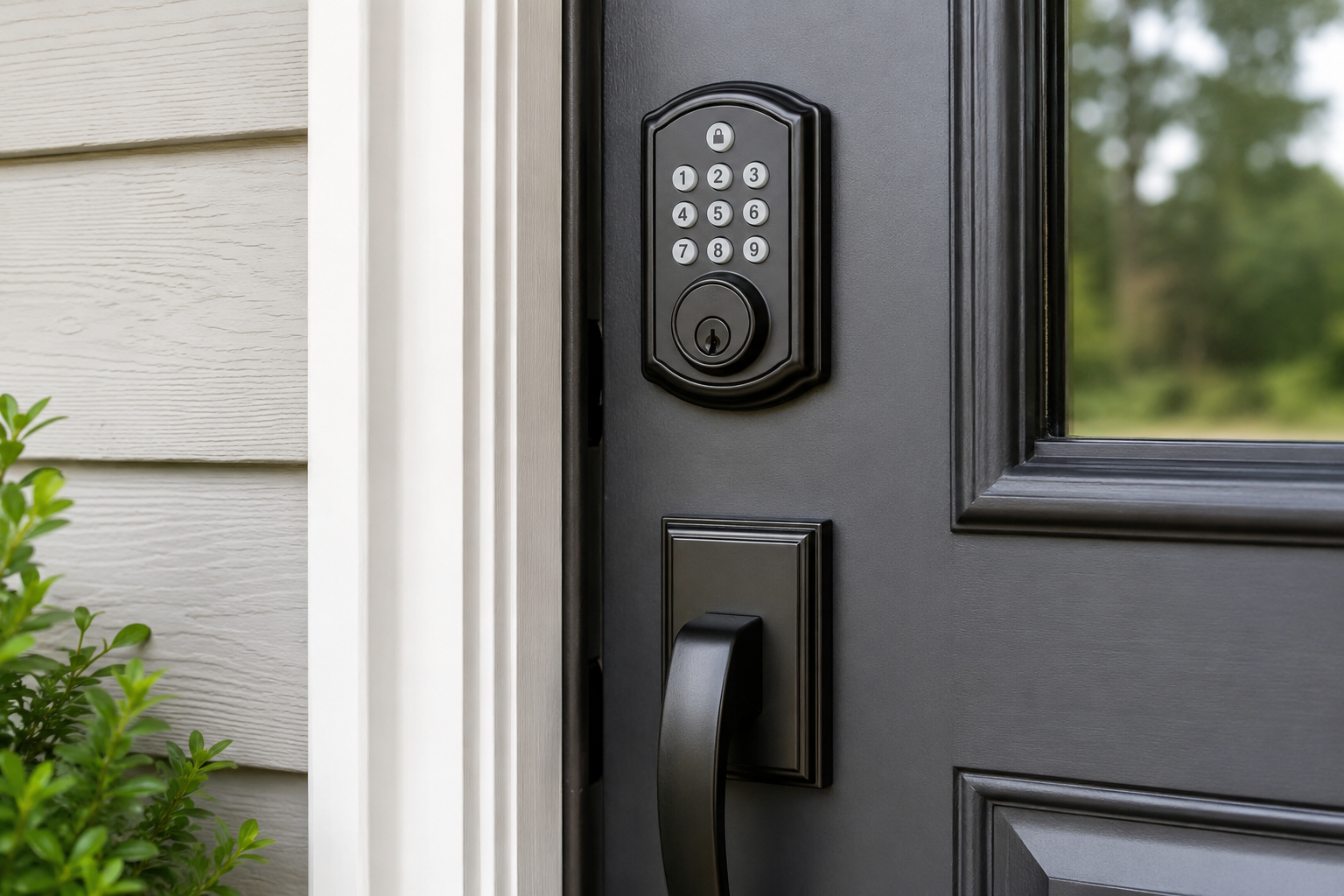
A mechanical lockbox has one code, and by the end of a listing, everyone has it. A smart lock works differently: you can issue individual codes — one for the buyer's agent at 2:00, another for the inspector on Thursday morning — and delete them the moment the job is done. Many models keep a time-stamped log of every entry, so you know exactly who opened the door and when. If a showing runs long or a code needs to change, you can handle it from your phone without driving back across town.
Protection for Vacant Listings
A vacant property is a vulnerable one. Smart locks paired with entry alerts tell you the moment a door opens, whether you expected it or not, and let you confirm the home is locked from anywhere. For sellers who have already moved out and are trusting you with their biggest asset, that kind of oversight is a genuine selling point for your services — not just a convenience for you.
A Closing Gift That Actually Gets Used
A bottle of wine gets finished. A cutting board gets shoved in a drawer. A professionally installed smart lock gets used every single day, and it pairs naturally with the security step every new owner should take anyway: rekeying. Nobody knows how many copies of the old keys are still out there — neighbors, contractors, previous owners' relatives. A rekey plus a smart lock upgrade means your clients start completely fresh in their new home, with you to thank for it.
For the Doors You Manage Between Occupants
If your work includes rentals, turnovers, or coordinating trades, smart locks earn their keep fast. Give the painter a code for the week, the carpet crew a code for the day, and the stager a code for an afternoon — no key pickups, no waiting in an empty driveway, no wondering who still has a copy when the project wraps. When the property changes hands for good, a professional rekey closes the loop on the mechanical side.
What to Look For (Especially Around Here)
Not every smart lock handles the real world equally well, so it pays to check a few things before you buy:
Durability rating. ANSI/BHMA Grade 1 or 2 hardware holds up to daily use and forced-entry attempts far better than bargain models.
Climate tolerance. Arizona heat and Utah cold are hard on batteries, electronics, and finishes, so look for locks rated for temperature extremes and plan on seasonal maintenance.
Backup access. A keyed override and low-battery warnings mean a dead battery never becomes a lockout.
Connectivity that fits the property. Wi-Fi, Bluetooth, and Z-Wave models each have tradeoffs, and the right choice depends on whether the lock needs to tie into a broader security or automation system.
Why Installation Makes or Breaks It
Here's the industry secret: most "smart lock problems" are actually door problems. A misaligned strike plate, a sagging hinge, or a deadbolt that binds will defeat the smartest lock on the market. Professional installation ensures the bolt throws smoothly, the lock is calibrated correctly, and everything integrates with any alarm or access system already on the property.
That's where we come in. ARCO has been installing and servicing locks since 1995 — fully licensed and insured, with free phone support whenever a question comes up. Whether it's one smart lock installation for a closing gift or hardware for every door in a portfolio, we'll help you choose the right lock and install it right the first time.
Handling closings or managing properties regularly? Ask about our real estate partner program for rekeys and smart lock installs, or
request service to get started.
Adam Smith